

Our first research report painted a mixed picture of today’s workplace relationships and showed just how impactful team building can be to help remedy many of the challenges impacting the four-generation workforce, from communication to collaboration.
Against a backdrop of low employee engagement, it’s in employers’ best interests to help colleagues reconnect and maximise the wide-ranging and long-lasting impacts team building can bring.
Yet, as highlighted in the second half of our market research, many of today’s team building activities are failing to effectively cater for and engage diverse workforces. Not only does this impact what businesses can get out of their team building efforts, it can also isolate certain employees and make them feel overlooked or misunderstood by their employers.
Here, we share some of the main findings from our research, exploring UK office workers’ experiences of team building to date and where planning could be falling short.
1. Neurodivergence is often overlooked
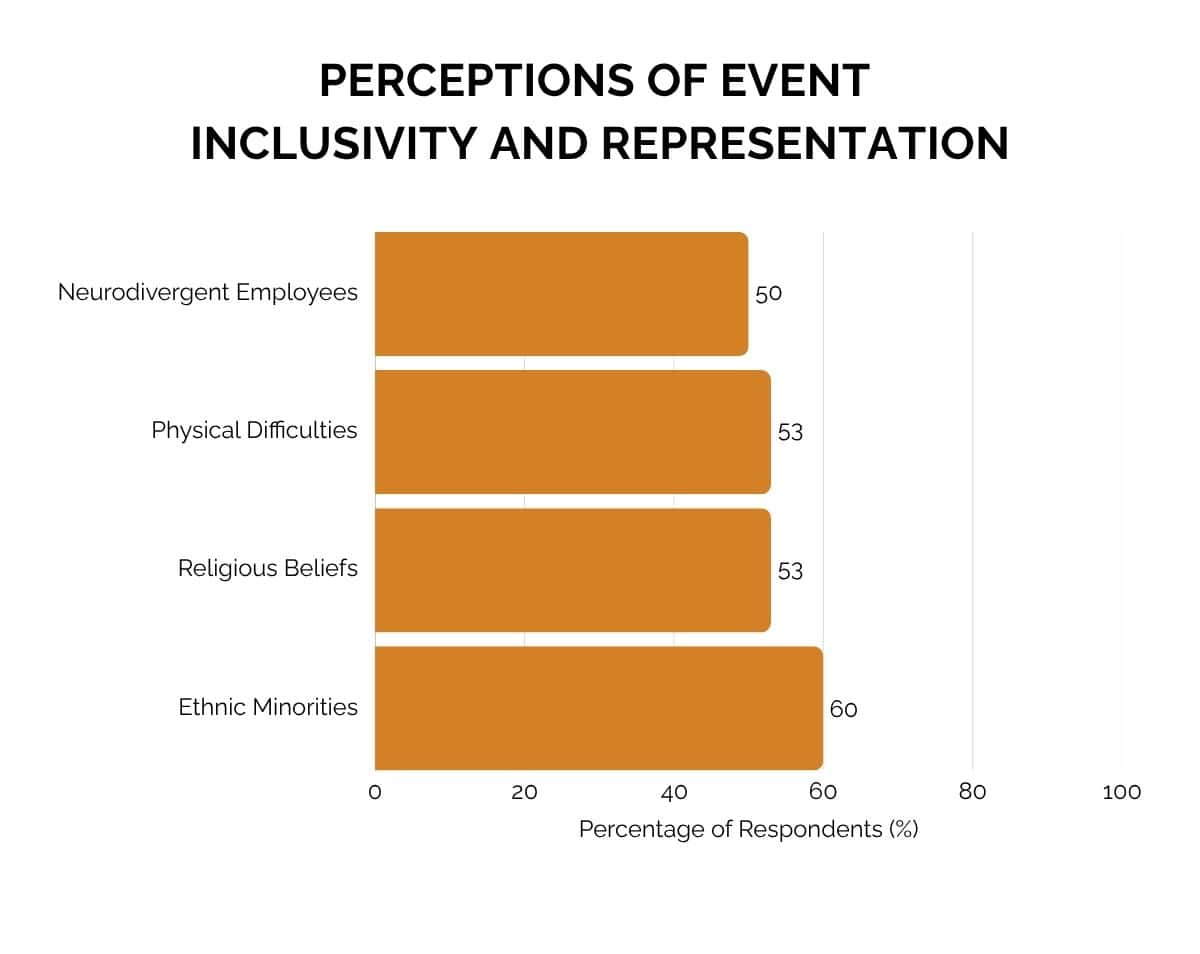
Just half of the UK office employees we spoke to felt their last team building activity catered to neurodiverse employees. Considering that around 15-20% of the UK population are neurodivergent, the stats suggest that a significant proportion of the workforce have had their sensory sensitivities and processing needs overlooked, impacting their ability to take part.
2. Physical disabilities fared only marginally better
Just 53% of our survey respondents agreed the last activity they participated in was inclusive of employees with physical disabilities. With ‘invisible’ conditions making up around 70-80% of all disabilities, it’s possible colleagues don’t have a full or accurate picture of the spectrum of disabilities in their workplace. Therefore, the true number of employees having their needs overlooked could be even higher than the research suggests.
3. Religion and culture need greater consideration
Religious inclusion was another critical area where many activities fell short, with just 53% in agreement that their last team event took colleagues’ religious beliefs into account. For example, employees who follow Islam, where alcohol is strictly prohibited, may understandably feel like they haven’t been considered when team activities revolve around boozy nights out and after-work drinks.
4. Organisations are facing barriers to effective planning
While respondents recognise where their team activities might be falling short, many would be reluctant to take on the planning role themselves. 29% admitted they’d be put off due to limited budget, while 27% would be deterred by how long it takes and 22% feel they don’t have the necessary time to commit outside of their role.
Alongside resource challenges, some employees would avoid taking on the planning role due judgement or disinterest from colleagues. Almost a quarter (24%) feel they’d experience a lack of buy-in from their peers, while concerningly, almost one in five (19%) said the same of management.
5. There’s a greater opportunity to align team building efforts with the causes that matter to employees
Today’s employees, in particular younger entrants to the workforce, want to work for a company that reflects their values and contributes to wider causes and communities. When we asked survey respondents which areas they’d like to see their employer prioritise in future, 18% selected sustainability, and 11% chose fundraising and charity work in their top three.
Considering that more self-serving categories like employee benefits, career development and wellbeing were also on the list, these selections speak volumes. Employees want to work for purpose-led organisations that are committed to driving change. By investing in CSR team activities, companies can demonstrate their commitment to important causes, while creating experiences that resonate more deeply with their workforce.
While many organisations are undoubtedly well-intentioned, our research suggests many could be doing more to shape these experiences around their employees.
Download our e-guide to learn more about our research, and find practical tips for building more inclusive, accessible and engaging team building experiences. Get your copy here.