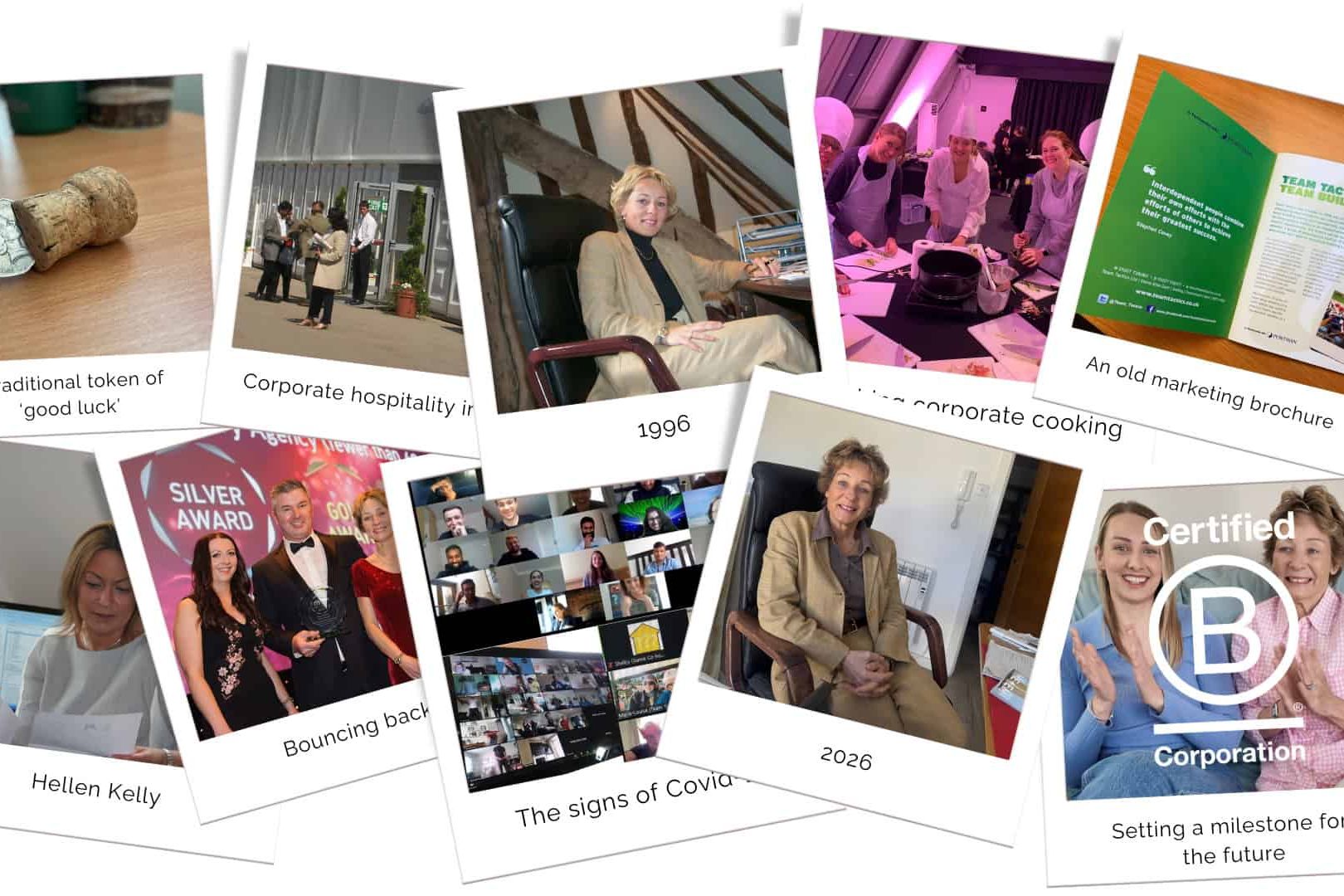


As Team Tactics celebrates 30 years in business, I’ve found myself reflecting not just on our own journey, but on how much the corporate events industry has changed during that time. The types of events we deliver have shifted, as has what organisations want from them, but one of the biggest transformations is in the way we market, sell and plan those experiences.
Ways of working and communicating have changed exponentially in the last three decades, from phone, fax and face-to-face to a world of primarily digital discovery. The process looks completely different to when I started out, and while technology has transformed the industry in so many positive ways, we risk eroding the element of human connection that great events are built on.
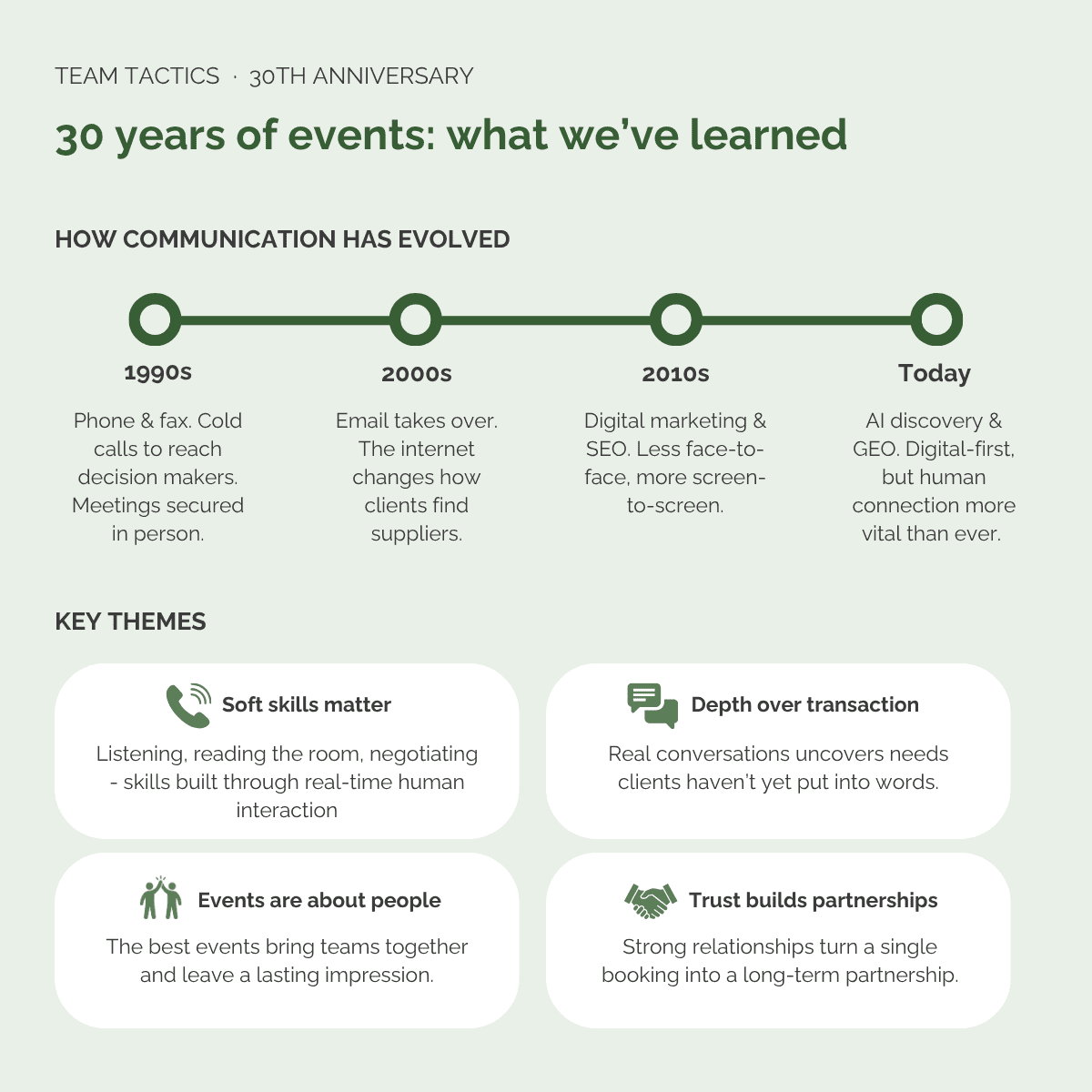
How connection and communications have changed
When I first started Team Tactics, most of my working day revolved around the phone, The internet was still in its infancy and people weren’t searching for services or suppliers in the way they do today.
I’d call prospective clients, reach reception, and use my best persuasion skills to get through to the sales director, or person responsible for events within the company. The aim was always to secure a meeting face-to-face, because that was where the real work happened. Those conversations gave me the chance to ask the right questions, understand what clients were really trying to achieve, and build a relationship from the very beginning. It was also where I learned some of the most valuable skills of my career – listening, reading between the lines, thinking on my feet, negotiating, problem solving, and building trust and rapport.
Today, search engines, email and AI discovery play a major role in how clients find and shortlist suppliers. Communication usually happens via email, while less office-based work means it’s harder to speak on the phone or arrange an in-person visit. And while digital marketing, SEO and GEO are undoubtedly essential to the modern events industry, as the process becomes more digital, we need to be mindful of what we risk losing along the way.
The skills gap behind the screen
When so much of the client journey happens behind a screen, there are fewer opportunities to develop the soft skills that are central to strong, productive client relationships. This is especially true for younger entrants to the workforce, who are learning in very different circumstances with much less exposure to real-time interactions. And, without those regular opportunities to practice vital communication skills, those moments can feel bigger and more intimidating than they really are.
This is reflected in research from Trinity College London which shows younger workers increasingly feel anxious about workplace interactions, including working with unknown people, face-to-face small talk and making phone calls.
However, casting my mind back to my early career, I probably carried the same anxieties around these interactions. Picking up the phone to a stranger or walking into a room full of clients can feel uncomfortable, but confidence comes from doing it repeatedly. Getting it wrong sometimes and learning from mistakes is key to building skill and resilience.
This skills gap is not cause for criticism of the next generation, it’s simply a reflection of the times. Young professionals have valuable digital skills, adaptability and fresh ways of thinking that are hugely important in today’s landscape, but if we want them to become confident, rounded events professionals, we also need to create opportunities for them to build the human skills that are just as essential.
Better conversations lead to better corporate events
With so much of the event sales and design process taking place online, I also wonder about the impact on event quality and their ability to meet expectations.
Real-time conversation allows for better context, depth and detail. It allows you to pick up on small nuances that rarely come through on email, or lead you to uncover a concern the client hadn’t initially mentioned, or a bigger objective sitting behind the event brief. Sometimes clients haven’t considered these requirements in depth or yet spoken them into consciousness, but a human back-and-forth interaction enables you to ask the right questions and bring important wants and needs to the surface.
When communication becomes transactional, briefs can lose that depth. You might tick all the obvious boxes, but miss the small, personal touches that make an event feel tailored and meaningful. It’s often the important details, unearthed through conversation, that make the difference between a good event that does the job and a truly memorable one that surpasses expectation.
Combining digital and human approaches
Events are, at their core, about people. They are about creating experiences that bring teams together, build relationships and leave a lasting impression. Without strong communication in the planning process, it becomes much harder to deliver that kind of experience.
At Team Tactics, this is something we work hard to preserve. We are a small, passionate and personable team, and one of the things clients consistently value is our attention to detail and the time we take to really understand what they need.
This isn’t about turning back the clock. There’s no question that buying behaviours have changed and clients will continue to source suppliers online with the help of AI. Yet, digital visibility is only part of what makes a great events business.
The real value still lies in human connection – in the conversations that build trust, the understanding that leads to better execution, and the relationships that turn one booking into a long-term partnership. Corporate events are about people, and no matter how much the industry evolves, that part should never be lost.
Whether you’re planning a company celebration, team building day or multi-day retreat, at Team Tactics, we believe the best results come from understanding your people and creating events with real impact. Talk to us about your next event today.