

With over two fifths (41%) of businesses increasing on-site working requirements in the past year and major employers continuing to push for a full return to the office, it can be tempting to assume the era of remote work is behind us.
The reality is that hybrid working remains firmly embedded in the UK. In fact, as a nation we remain a global leader in flexible work models, with the second-highest adoption of hybrid working in the world after Canada.
Yet, at the same time, employee engagement remains stubbornly low. Gallup research suggests just 10% of UK employees are engaged at work, sitting behind European and global averages at 12% and 20% respectively.
For leaders, this speaks to an increasingly familiar balancing act. Employees value flexibility, and employers that offer it are often rewarded in many respects. But as teams become more geographically dispersed, organisations also have to work harder to preserve the relationships, connection and shared culture that help teams perform at their best.
Jump to:
How hybrid working has changed team dynamics?
Hybrid working has transformed the modern workplace for the better in many ways. Employees enjoy greater flexibility and improved work-life balance, while organisations can benefit from higher retention, satisfaction, and access to wider talent pools. However, remote and hybrid working has also fundamentally changed the way teams connect and build relationships.
When colleagues aren’t sharing the same work environment every day, there are fewer opportunities for the spontaneous conversation and informal relationship building that often underpins effective work-related communication and collaboration. It also means new entrants to the workforce can take longer to integrate and increases the risk of siloed working, contributing to a more fragmented culture.
Although technology has undoubtedly made distributed working possible, video calls, instant messaging and project management tools can mean interactions become transactional. They enable communication and productivity but don’t necessarily help colleagues feel culture or connection.
In many ways, culture used to happen more naturally through proximity. Today, building a shared identity, sense of belonging and cohesive organisational culture requires intention.
Why organisations are bringing people together again
Like many businesses in the events industry, we saw virtual team building become invaluable during the pandemic. Almost overnight, organisations needed new ways to keep people connected while working apart, and we developed dozens of creative virtual experiences to help teams connect, have fun and maintain morale during an incredibly uncertain time.
At the time, we expected virtual and in-person events to coexist for the long term. As hybrid working became established, it seemed reasonable to assume organisations would continue to favour online experiences because they were convenient, accessible and removed the need for travel.
Yet, the overwhelming majority of organisations we now work with actively want to bring people together in person. Google Trends tells a similar story. Interest in virtual team building surged during 2020 and 2021 but has steadily declined as restrictions eased. Our own enquiries followed a similar pattern.
What’s clear is that organisations are increasingly recognising the value of creating moments where employees can connect outside their day-to-day roles, and that some aspects of team connection simply work better face to face.
Our favourite team building activities for hybrid teams
There’s no one-size-fits-all approach to bringing hybrid teams together. The best activity will always depend on your unique set of circumstances and objectives.
That said, after more than 30 years designing and delivering team experiences, there are a handful of activities we consistently recommend for organisations with dispersed or hybrid workforces.
1. Give a Helping Hand
When people work towards a cause that extends beyond themselves, collaboration often feels more authentic. CSR initiatives shift the focus away from simply having fun and towards achieving something that has a tangible impact.
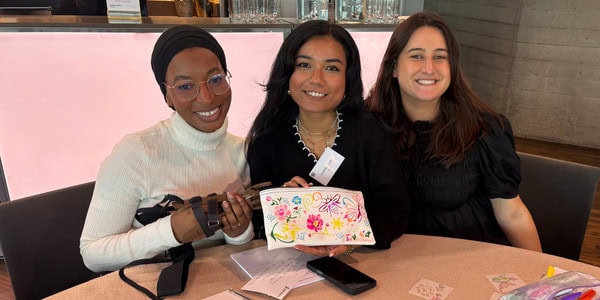
One of our favorites is Give a Helping Hand, where teams work together to build prosthetic hands that are donated to people living in developing countries. Along the way, participants learn about the people whose lives they’ll be changing, giving the activity a clear sense of purpose beyond simply having fun.
Charlotte, one of our event specialists, believes activities like this resonate particularly well with hybrid teams: “People working in hybrid environments often become pros at working independently. Activities like Helping Hand encourage them to practice essential communication and collaboration skills they don’t use in the same way day to day, as they lose the use of their dominant hand while building. At the same time, they’re contributing to an amazing cause, which gives the whole experience much more meaning.”
2. The Bigger Picture
One of the challenges many hybrid organisations face is helping employees feel connected not just to their immediate team, but to the wider organisation.
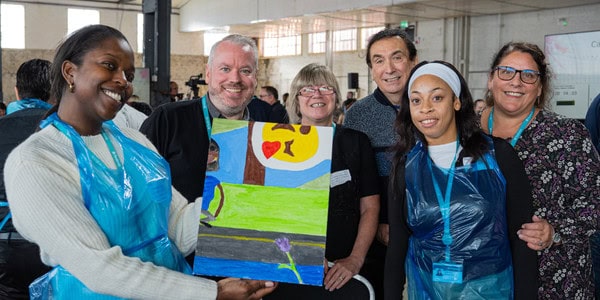
Our Bigger Picture activity captures that idea perfectly. Each team creates its own section of a large artwork without initially knowing what the finished image will look like. Teams must communicate and coordinate with other teams around them to ensure the colours, lines and shapes on their canvas align with the neighboring ones perfectly to effectively create the final, larger-than-life image.
Charlotte explains why this activity often strikes a chord with hybrid organisations: “When people are working remotely, it can sometimes be difficult to see how their own role contributes to the wider business mission. Bigger Picture makes that visible – everyone’s work is important, and if one section doesn’t line up, the final result doesn’t work. It’s a brilliant metaphor for how successful organisations operate.”
The activity can also be customised using imagery that reflects an organisation’s purpose, values or future vision, making the finished artwork a lasting reminder of the experience.
That proved particularly valuable when we worked with housing association Peabody following a major merger. Bringing newly expanded teams together through Bigger Picture helped reinforce their shared vision, while post-event feedback highlighted improvements in organisational pride, employee engagement and sense of belonging.
3. Clean Water for All
Sometimes the most powerful team building exercises for hybrid teams are those that make a tangible difference beyond the workplace.
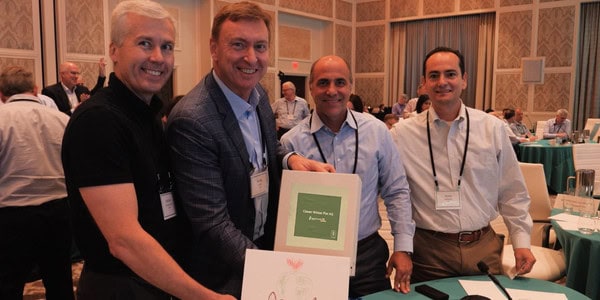
In our Clean Water For All activity, participants work together to assemble fully functioning water filtration systems that will provide clean, safe drinking water to communities in need. Teams learn about the global water crisis and the lasting impact their work will have before getting to work – but there’s a twist. All but one member of the team is blindfolded, leaving that colleague to guide the rest through the task.
Senior events manager Ellie explains: “Teams rely on communication, listening and trust to complete the challenge successfully. It encourages people to lean on their colleagues in a way they might not during everyday work, and helps these vital collaboration skills develop organically, leaving teams with a stronger sense of connection long after the activity has finished.”
4. It’s a Rat Trap
Activities that require colleagues to think beyond their usual working relationships to solve a collective challenge always prove a hit with hybrid teams.
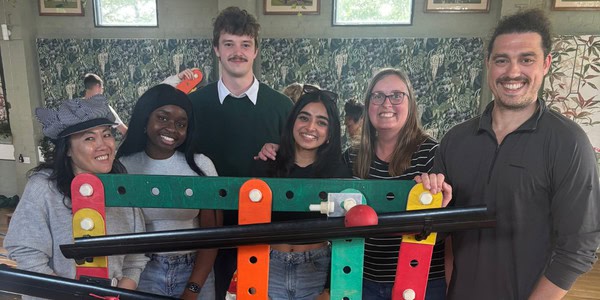
Inspired by the classic board game, It’s a Rat Trap sees smaller groups work together to each build one section of a giant chain reaction machine. Every structure must work perfectly with the next for the final sequence to succeed, meaning communication between teams is just as important as the work happening within them.
It’s creative, collaborative and surprisingly tense as the moment of truth approaches. Most importantly, success depends on every team understanding how their contribution affects everyone else’s.
As our event specialist Ellie puts it: “Teams start by focusing on their own structure, but very quickly realise they have to work with everyone else if the chain reaction is going to succeed. It’s a great way of encouraging people to work beyond their immediate group and connect with colleagues they don’t normally collaborate with.”
RiverArk incorporated Rat Trap into a recent company gathering, which bought its globally dispersed workforce together. The impact went beyond the immediate boost in morale and team spirit, creating a foundation of stronger relationships that translated into tangible improvements in the workplace.
5. One Voice
One of the greatest advantages of bringing hybrid teams together in person is creating a shared experience that continues to unite people long after the event has finished. Like Rat Trap, One Voice provides a memorable finale that often becomes a reference point for teams months or even years afterwards.
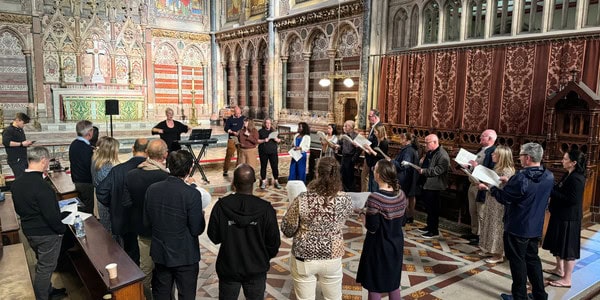
During the activity, participants are guided by a professional musical director as they learn harmonies before coming together to perform as one choir. Everyone has an important role to play, and it’s only when every voice comes together that the performance truly comes to life. It might sound daunting, but time and again we’re amazed by how quickly initial nerves turn into laughter, encouragement and an enormous sense of collective achievement.
When pharmaceutical company Consilient Health celebrated its twentieth anniversary, they wanted an experience that would bring together colleagues from across their dispersed workforce while reinforcing their shared identity as an organisation.
Despite taking place the morning after the company celebrations, One Voice quickly lifted energy levels and united the room. By the end of the session, colleagues who had started the day as separate groups were performing together with confidence, leaving the event with stronger relationships, shared memories and a renewed sense of belonging.
What makes a team activity genuinely effective for hybrid teams?
Whether it’s building prosthetic hands for people in need, creating a giant collaborative artwork, assembling life-changing water filtration systems, constructing an elaborate chain reaction or performing as a choir, the activities that have the biggest impact tend to share the same characteristics:
- Shared purpose – The strongest team building activities don’t force people to interact – they give them a genuine reason to. When everyone is working towards a meaningful goal, communication and collaboration happen as a natural and necessary byproduct of the task, making it feel authentic rather than awkward or contrived.
- Genuine collaboration – The most effective activities are designed so that everyone has a role to play. They rely on multiple contributions to succeed, encouraging participants to listen, adapt and problem-solve together. This also naturally brings people into contact with colleagues they might not usually work with, helping to break down silos across teams and departments.
- Reconnecting with the mission in hand – One of the less obvious effects of hybrid working is that employees can become highly focused on their individual role or immediate team, while feeling more removed from the wider organisation. Activities that require a collective outcome help reconnect those individual efforts to a shared goal, reinforcing how each person’s contribution fits into something much bigger.
- A stronger sense of belonging – Where employees may spend much of their time working independently, shared experiences play an important role in reinforcing connection, trust and identity. When people come together and collaborate in a meaningful way, it strengthens their sense of belonging not just to a task, but to a team and a wider culture.
- Lasting memories – One of the most powerful outcomes of bringing people together in person is that the experience continues long after it ends. The conversations, challenges, achievements and moments of humour become shared reference points that colleagues revisit over time. These memories strengthen relationships, build rapport and give dispersed teams something they simply cannot replicate through day-to-day virtual interaction.
Helping hybrid team reconnect
In a hybrid world, connection doesn’t happen by accident. The organisations with the strongest cultures are the ones that make time and space for it to happen intentionally.
Crucially, however, employees don’t want to take part in activities simply for the sake of it. The experiences that receive the strongest feedback are those with an obvious purpose, clear relevance and genuine opportunities to connect with colleagues. Rather than relying on gimmicks or ‘forced fun’, they respect people’s intelligence and create an environment where relationships develop organically.
If you’d like to learn more about the range of team building activities we offer, or you’d like help selecting the right activity for your workforce and objectives, we’d love to chat. Get a quote or speak to a member of our friend team today.